
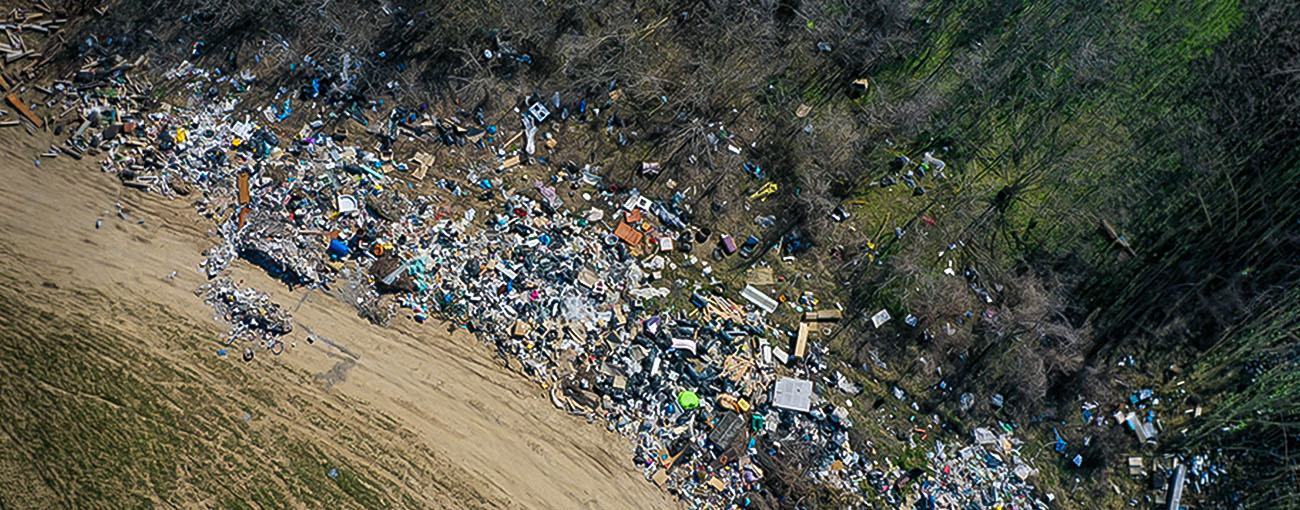
The Government has unveiled a new package of measures intended to tackle organised waste crime in England, including substantially higher financial penalties, more frontline Environment Agency officers and closer coordination between regulators, police, local authorities and regional leaders.
Announced by Prime Minister Andy Burnham in August 2026, the measures are intended to disrupt the criminal networks behind illegal waste sites and make waste crime a higher-risk, lower-reward activity.
The package builds on the Government’s wider Waste Crime Action Plan and combines stronger, intelligent-led enforcement with action to clear some of England’s most serious illegal waste sites.
What new measures have been announced?
A central element of the crackdown will be a significant increase in financial penalties.
Under the Government’s plans, those who illegally dump waste or fail to treat it correctly could face fines of up to £5,000, up from the current maximum of £300 for the offences covered by the announcement. Those responsible for more serious waste offences can already face much stronger sanctions, including prosecution and imprisonment.
The Government has also announced:
- More Environment Agency officers on the frontline, increasing enforcement capacity.
- Greater use of drones, intelligence and analysis to identify illegal sites and criminal activity.
- A larger role for the police and National Crime Agency in tackling organised waste crime.
- Increased capacity to identify and confiscate assets, including cash, vehicles and property acquired through the proceeds of waste crime.
- Use of powers under the Crime and Policing Act 2026 to accelerate the enforcement of confiscation orders.
- A new Waste Crime Crackdown Group, chaired by Environment Secretary Dame Angela Eagle, bringing together regulators, law enforcement and the waste sector.
The measures build on the Environment Agency’s existing enforcement framework, which includes advice and warnings, civil sanctions, stop notices and criminal prosecution, as well as powers in certain circumstances to suspend or revoke environmental permits.
The Agency’s enforcement policy prioritises cases involving serious environmental harm, organised crime, overt criminal activity and substantial illegal gain.
A more regional approach to waste crime
The Government also plans to give mayors and council leaders a greater role in coordinating responses to waste crime.
West Yorkshire and Greater Manchester will be the first areas to adopt the new region-led approach. Regional leaders will help coordinate councils, police, regulators and other enforcement agencies, with decisions informed by local intelligence and the communities most affected.
The model builds on the existing Joint Unit for Waste Crime but is designed to improve intelligence sharing and allow enforcement activity to respond more directly to regional threats.
Targeting organised waste crime
The Government has emphasised that the measures are aimed not simply at isolated incidents of fly-tipping, but at the organised criminal activity behind some large-scale illegal waste operations.
According to the Government, the first phase of Operation Unite resulted in:
- 42 site visits
- 17 environmental permits being suspended or revoked, and
- more than 30 criminal investigations being opened.
The next phase of Operation Unite will use intelligence to target priority operators, vehicles, routes and waste sites, concentrating enforcement resources on the activities considered to present the greatest risk.
Alongside these measures, the Government has identified three serious illegal waste sites for clearance, subject to feasibility assessments:
- Power Station Road, Isle of Sheppey, Kent
- Aymer Close, Runnymede, Surrey
- Midland Road, Bradford, West Yorkshire
The sites were prioritised based on their scale, the risks posed to nearby communities, environmental damage and links to persistent non-compliance and organised waste crime.
Together, the three locations contain approximately 22,000 tonnes of illegally dumped waste and are estimated to affect around 2,900 families.
What does this mean for the waste sector?
For legitimate waste operators, stronger action against illegal activity could help create a fairer operating environment.
Waste crime allows unlawful operators to avoid the costs associated with permits, appropriate treatment, monitoring and other regulatory requirements. The Environment Agency’s existing enforcement policy recognises that non-compliant businesses can undermine compliant operators and distort competition.
Industry reaction has therefore broadly welcomed stronger enforcement against criminal operators.
The Renewable Energy Association highlighted that waste crime can damage the environment, undermine confidence in recycling and place responsible operators at a competitive disadvantage. However, it also stressed that enforcement should remain focused on businesses operating outside the law rather than creating additional burdens for compliant businesses.
For businesses operating within the waste and recycling sector, the announcement reinforces the importance of maintaining appropriate authorisations, following waste management requirements and ensuring that waste is transferred only through legitimate and compliant routes.
Businesses that produce, handle or transfer waste should ensure that waste is correctly classified and documented, that carriers and receiving sites hold the necessary registrations and permits, and that appropriate duty-of-care checks are recorded.
What happens next?
The announcement signals a more coordinated and intelligence-led approach to waste crime, combining stronger financial penalties with additional enforcement capacity and closer cooperation between the Environment Agency, police, local government and regional authorities.
The Government’s stated intention is clear: to disrupt the financial incentives behind illegal waste activity, dismantle organised criminal networks and prevent operators from simply relocating when enforcement action is taken.