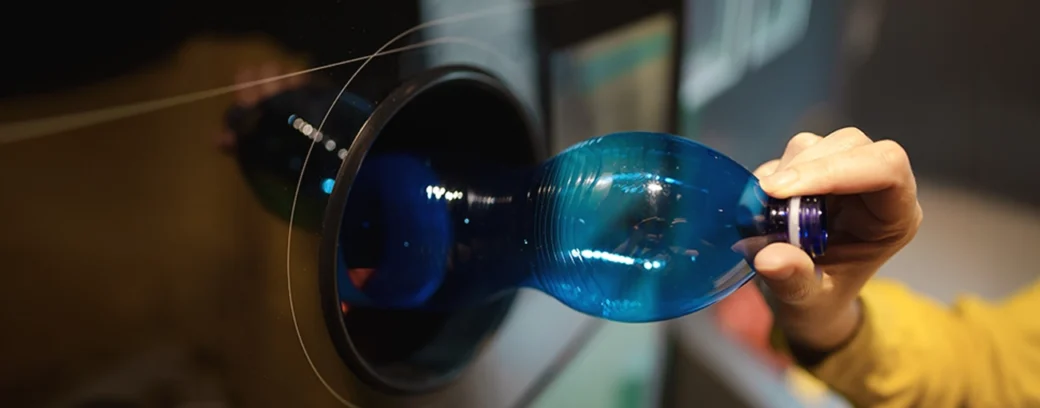

Exchange for Change has confirmed that a flat 20p deposit will apply to all in-scope drinks containers when the Deposit Return Scheme launches across England, Scotland and Northern Ireland in October 2027.
The announcement provides long-awaited clarity for producers, retailers and supply chain stakeholders, with around 18 months remaining to prepare for implementation.
20p deposit to apply at point of purchase
The not-for-profit, industry-led organisation responsible for delivering the DRS scheme confirmed that the 20p deposit will be added at the point of purchase to all single-use drinks containers.
What containers are included?
All bottles and cans for water and beverages (soft & alcoholic drinks) for human consumption, with capacity of at least 150 millilitres but no more than 3 litres of liquid.
Included within the scope are:
- PET plastic bottles
- Aluminium cans
- Steel containers
Consumers will pay the deposit when purchasing an in-scope drink and receive a full refund when the empty container is returned through the scheme.
Key milestone ahead of October 2027 launch
The confirmation marks a significant step forward in DRS delivery, giving producers, retailers and businesses greater certainty ahead of implementation.
With just under 18 months until the scheme goes live, the early announcement of the deposit level is intended to support business planning and operational readiness.
Decision follows industry consultation
The decision follows extensive consultation with industry and analysis of deposit return systems operating in Europe and elsewhere.
Exchange for Change considered a range of deposit values and different approaches, including whether the deposit should vary depending on container size or material.
Its assessment focused on identifying a deposit level that would:
- Provide a strong enough incentive for consumers to return containers.
- Remain proportionate for consumers.
- Be simple to understand.
- Be practical for producers and retailers to implement.
Why 20p was chosen
Behavioural market research commissioned as part of the analysis tested consumer responses to deposit levels between 10p and 30p. The findings indicated:
- Deposits below 15p are unlikely to create a strong enough incentive to drive high return rates
- Higher deposits, such as 30p, could introduce disproportionate upfront costs for consumers, particularly for multipack purchases
A flat 20p deposit was therefore identified as the most balanced option, providing a meaningful incentive while remaining proportionate and practical.
The scheme is expected to achieve a 90% return rate within three years of launch, aligning with targets set across the UK.
Flat rate preferred over variable deposits
Exchange for Change also considered whether a variable deposit model, based on container size or material, should be introduced.
While used in some international systems, the analysis found that they can lead to lower return rates for smaller containers.
A single flat rate is intended to:
- Simplify consumer understanding
- Support consistent participation across all container types
- Reduce operational complexity for retailers and producers
Will DRS drive higher recycling rates?
The DRS is intended to deliver a step change in the collection of drinks containers across the UK, with objectives including:
- Increasing recycling rates
- Reducing litter
- Improving the quality of collected materials
- Supporting a more circular economy
By introducing a financial incentive for returns, the scheme is expected to increase capture rates for high-value materials such as aluminium and PET plastic.
However, questions remain around how effective a UK-wide system will be in practice, particularly given the divergence of approach across the four nations. Wales’ decision to include glass within its scheme has been a notable point of contention, with parts of the drinks industry raising concerns about added cost, operational complexity and the potential disruption to existing, well-established glass recycling systems.
There is also uncertainty around how differing system designs could impact cross-border trade, labelling requirements and consumer behaviour. Rather than a single, harmonised UK system, producers may ultimately need to navigate multiple variations of DRS, which could dilute some of the intended efficiency and environmental benefits.
Clarity’s view and what this means for producers and retailers
While the confirmation of a flat 20p deposit provides a degree of certainty for businesses, it is unlikely to settle all industry concerns. Many producers – particularly those with significant exposure to glass packaging – will be watching closely how the Welsh scheme develops and what this means for cost, logistics and compliance obligations.
The inclusion of glass in Wales raises important questions about whether DRS will complement or conflict with existing kerbside collection systems, and whether the overall environmental outcome will justify the additional complexity for producers and retailers.
As the DRS scheme progresses towards its October 2027 launch, further detail will be critical. Producers will need clarity not just on deposit levels, but on labelling, interoperability between schemes, reporting requirements and how different material streams will be managed in practice.
For now, while this announcement marks progress, it also highlights that significant uncertainty remains, particularly for businesses operating across multiple UK nations or with diverse packaging portfolios.