You are here: Home / News / Exchange for Change Sets Out New RVM Rules, Exemptions and Retailer Support

Exchange for Change Sets Out New RVM Rules, Exemptions and Retailer Support

Exchange for Change has published further detail on how Reverse Vending Machines (RVMs) will operate under the UK’s Deposit Return Scheme (DRS), giving retailers, suppliers and operators a clearer picture of what will be required ahead of the scheme’s launch in October 2027.

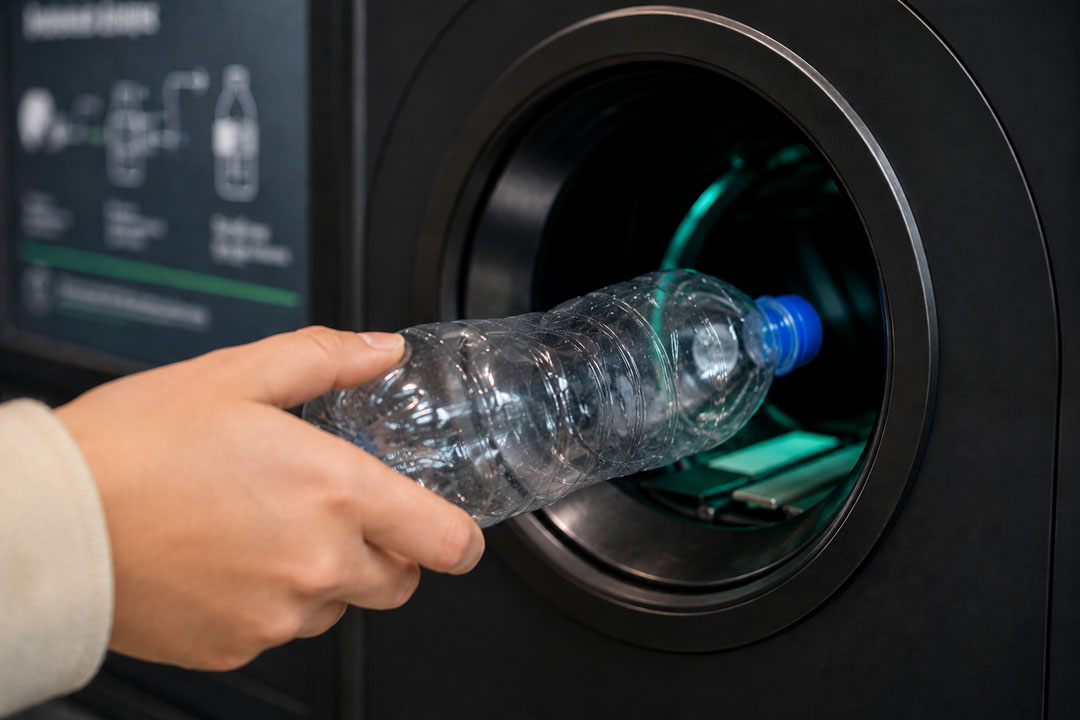
RVMs are expected to play a major role in the scheme across England, Scotland and Northern Ireland, allowing consumers to return empty drink containers and reclaim their deposit. The new specification is intended to create a consistent standard across the three nations while still leaving room for future technology improvements.

The scheme covered by Exchange for Change applies to England, Scotland and Northern Ireland, while Wales is continuing to develop a separate DRS model.

This article covers the latest technical requirements for RVMs, the proposed exemptions framework for some retailers, and the targeted grant scheme for smaller independent stores.


What the RVM requirements cover

The specification published by Exchange for Change sets out the minimum technical expectations that reverse vending machines will need to meet to operate within the scheme. In practical terms, it is intended to give suppliers and return point operators greater confidence that machines ordered for the scheme will be compatible with the DRS system.

Key areas covered include:

  • Container recognition: Machines must be able to correctly identify in-scope drinks containers and pay out the correct deposit.
  • Barcode and product matching: RVMs must use the scheme’s article list so containers can be verified accurately.
  • Detection technology: The minimum recognition set includes barcode recognition, shape recognition, weight detection and metal detection to help confirm container eligibility and reduce fraud risk.
  • Connectivity and integration: Machines must be capable of linking with the DMO’s systems and handling required data processes.
  • Accessibility and ease of use: Installations should comply with disability access requirements, and machines must support clear consumer messaging and refund processes.
  • Certification: Suppliers must go through an independent certification process before machines can connect to the DMO article list.
  • Branding and messaging: Machines must support approved DMO branding and standard consumer information.

Proposed exemptions for some retailers

Alongside the machine requirements, Exchange for Change has set out the circumstances in which certain retailers may qualify for an exemption from operating a return point.

Under the current approach:

  • Urban retailers with a sales area under 100m² would be automatically exempt from having to operate a return point.
  • These stores would not need to apply for an exemption.
  • They could still choose to host a return point voluntarily if they wanted to.

Exchange for Change is also developing a wider exemptions framework for other stores where operating a return point may be difficult or impractical.

Retailers that may be able to apply for an exemption include:

  • Urban stores between 100m² and 199m²
  • Rural stores under 200m²

Factors likely to be considered include:

  • Proximity to another local return point
  • Limited in-store space or layout constraints
  • Health, safety or hygiene concerns
  • Building or heritage restrictions
  • Utilities or infrastructure limitations.

Any exemption would still need approval from Exchange for Change and would only be granted where there is enough local return point coverage to maintain consumer access.

The wider exemptions policy remains under development and is still subject to regulatory approval across England, Northern Ireland and Scotland.

£6,000 grant plan for small independent retailers

Exchange for Change has also proposed a targeted grant scheme aimed at helping smaller independent retailers that will still need to host a return point where an RVM is judged to be the most suitable option.

Under the proposed scheme:

  • Eligible retailers could receive £6,000 per site.
  • The funding would be paid over three years.
  • This would be split into three annual payments of £2,000.
  • The first payment would be made around three months after implementation.
  • The funding would sit on top of the Return Handling Fee (RHF).

Exchange for Change plans to set aside £60 million over the first three years of scheme operation to fund the grants. The support is intended to help offset the upfront cost of installing an RVM, improve participation for smaller stores and help create a well-spread return point network.

However, the full eligibility rules and operational requirements are still being developed, with further guidance expected ahead of retailer registration.

Why these updates matter

Taken together, the announcements mark another step forward in preparing the Deposit Return Scheme for launch. For retailers, suppliers and RVM operators, the publication of the technical specification provides greater certainty on the standards machines are expected to meet and how they will interact with the wider scheme infrastructure.

At the same time, the proposed exemptions and financial support measures suggest Exchange for Change is attempting to balance the need for a broad and accessible return point network with the practical realities facing smaller retailers.

With the October 2027 launch date approaching, businesses involved in the supply, sale or collection of in-scope drinks containers are likely to see further operational guidance and scheme detail emerge over the coming months.

To find out more about the Deposit Return Scheme and how it might impact your business, access our complete guide here:

UK Deposit Return Scheme Explained: What Producers Need to Know | Clarity

Related News & Views