
You are here: Home / News / Exchange for Change Releases New Material Specifications for DRS Containers

Exchange for Change Releases New Material Specifications for DRS Containers

Exchange for Change has released further guidance on container material specifications ahead of the launch of the Deposit Return Scheme (DRS) across England, Scotland and Northern Ireland, setting out how drinks containers should be designed to support Reverse Vending Machine (RVM) acceptance and efficient scheme operation.

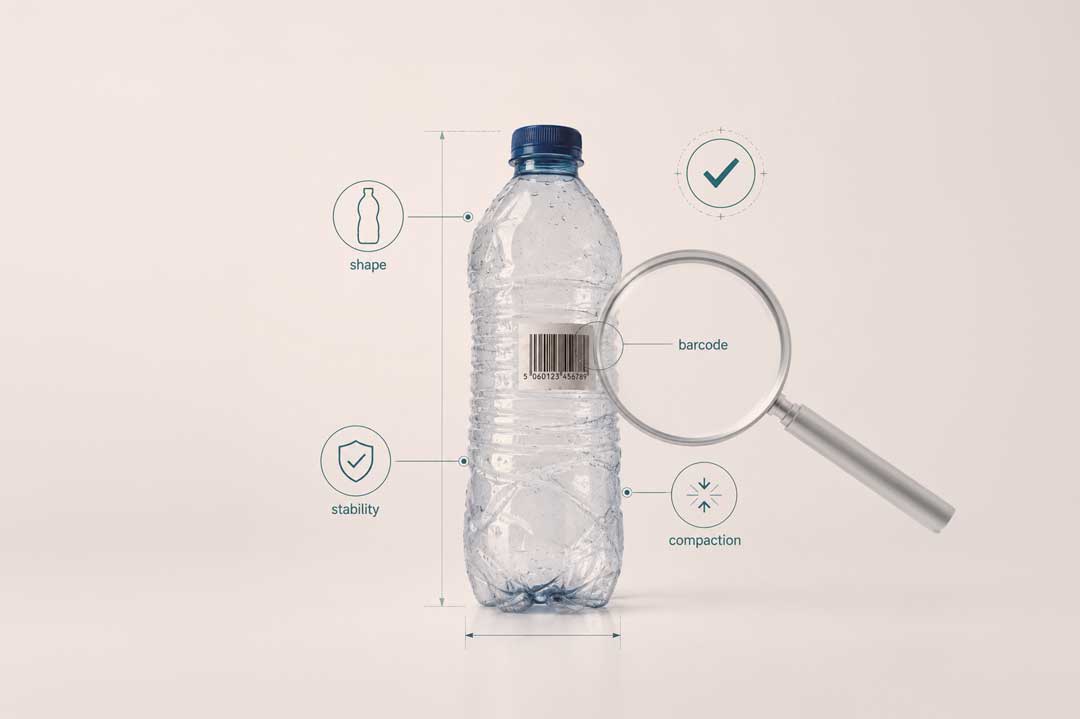
The guidance provides further detail on the practical packaging requirements producers should consider before registering containers within the scheme, including container dimensions, stability, material thickness and compaction performance.


Container dimensions and RVM acceptance

Under the new specifications, container dimensions must fall within set ranges to support acceptance by RVMs. While producers should review Exchange for Change’s full technical guidance for the detailed dimensional criteria, several key requirements have already been highlighted.

Most importantly:

  • the container width must not exceed its height; and
  • the height measurement must include any caps or closures.

Exchange for Change has also confirmed that cylindrical containers are preferred, as these are more likely to move smoothly through RVM systems and reduce the need for manual processing.

While non-cylindrical containers are not automatically excluded from the scheme, less conventional formats may require additional testing to confirm that they can be handled effectively by RVM equipment. Containers that cannot be accepted through RVMs because of their design or construction are expected to be managed through manual return and counting processes.

Stability requirements for containers

The guidance also introduces a simple stability check that producers should carry out before product registration.

Producers are advised to place the empty container on a flat surface. If the upper part of the container touches the surface, or if the container balances on its shoulder rather than standing securely, it may not be considered suitable for standard RVM processing.

This requirement is particularly relevant for containers that are:

  • non-cylindrical;
  • square or unusually shaped;
  • top-heavy; or
  • designed in a way that could affect how they travel through RVM equipment.

Exchange for Change has warned that non-cylindrical or top-heavy containers may increase the risk of RVM jams and could therefore require additional testing. Producers using containers that may fall into this category are being encouraged to engage with Exchange for Change at an early stage.

Material thickness and compaction

Material thickness is another key area covered in the new specifications. According to the guidance, containers that are too thick, rigid or unusually constructed may create issues inside RVMs, particularly during compaction.

Exchange for Change has stated that material thickness will be assessed through compression testing, with samples potentially required where containers have a non-standard shape or thickness.

The objective is to ensure that containers can be compacted safely and consistently after return, helping reduce storage and transport volumes while supporting efficient RVM operation.

Minimum compaction requirements

To be accepted by RVMs, containers must be capable of being reduced in volume by a minimum amount during compaction.

The material specification sets out the following requirements:

  • PET bottles must be capable of at least a 55% volume reduction during compaction.
  • Aluminium and steel cans must be capable of at least a 75% volume reduction during compaction.

What this means for producers

The new specifications underline the importance of designing containers with return systems in mind. Under DRS, packaging design will not only need to meet consumer, branding and product protection requirements, but also operational requirements linked to collection, sorting and compaction.

For producers, this may involve reviewing:

  • container shape and stability;
  • cap and closure design;
  • material thickness;
  • compaction performance;
  • whether non-standard containers require additional testing; and
  • whether existing packaging formats could create RVM acceptance issues.

Businesses placing in-scope drinks containers on the market should assess their packaging formats early to help avoid delays during registration or operational issues once the DRS scheme is live.

Preparing for DRS implementation

As further technical guidance continues to emerge, producers should continue monitoring Exchange for Change guidance and compare their existing packaging portfolio against the latest material specification requirements.

While the specifications do not prevent non-cylindrical or unusual container formats from entering the scheme, they make clear that these containers may face additional scrutiny and testing. Producers using less conventional formats should consider whether design changes may be needed to support smooth RVM processing and reduce reliance on manual handling.

Related News & Views