Packaging design is no longer simply a question of functionality, appearance and unit cost. Under packaging Extended Producer Responsibility, recyclability is becoming an increasingly important financial consideration.
The introduction of packaging EPR has fundamentally changed how the cost of packaging waste is allocated.
Producers are now responsible for contributing towards the cost of managing household packaging once it becomes waste. From the 2026–27 assessment year, those costs will also be influenced by how recyclable their packaging is.
Under the Recyclability Assessment Methodology (RAM), household packaging is assessed and assigned a RED, AMBER or GREEN rating. These ratings will determine whether producers pay more or less through modulated waste disposal fees.
This means that packaging decisions made during product development, procurement and manufacturing can now have a direct impact on future EPR liabilities.
Poor recyclability will become progressively more expensive
The purpose of fee modulation is to encourage businesses to move towards packaging that is easier to recycle.
AMBER-rated packaging will initially attract the standard household packaging waste disposal fee. RED-rated packaging will incur a higher charge, while the additional income generated from RED packaging will be used to reduce the fees applied to GREEN-rated packaging.
The difference is set to become increasingly significant.
For the 2026–27 assessment year, the household packaging waste disposal fee element applied to RED-rated packaging will be multiplied by 1.2. This will increase to 1.6 in 2027–28 and 2.0 in 2028–29.
Packaging that receives a RED rating could therefore become considerably more expensive if its recyclability is not improved.
For producers supplying high volumes of household packaging, even a seemingly small design feature can affect significant tonnage. Once the higher fee is applied across an entire product range, the resulting cost can be substantial.
Complex packaging can create additional exposure
Packaging is often designed to meet several competing requirements, including product protection, shelf life, transport efficiency, branding and consumer convenience.
However, features that improve performance in one area can create recycling challenges elsewhere.
Multi-material packaging is a common example. Bonding different materials together can provide strength or effective barrier protection, but the resulting structure may be difficult to separate and process through established recycling systems.
Other packaging features can also affect the final RAM rating, including coatings, laminates, adhesives, labels, sleeves, inks, barriers and components made from incompatible materials.
This does not mean that businesses can simply replace every complex packaging format with a mono-material alternative. Product safety, technical performance and waste prevention remain essential considerations.
It does mean, however, that producers need to understand the financial implications of these design choices and determine whether a more recyclable alternative can achieve the same purpose.
Small components can change the overall result
The recyclability of packaging cannot always be determined by looking only at its main material.
A container may appear readily recyclable, but its final assessment can also be influenced by integrated components such as a closure, label, seal, sleeve or dispensing mechanism.
These components may affect whether the packaging can be identified, sorted and processed effectively. They may also contaminate the recovered material or reduce its value.
As a result, relatively small components can have a disproportionate effect on the rating applied to the complete packaging item.
This makes it important to assess packaging at component level and to understand how those components interact during the collection, sorting and recycling process.
It also reinforces the need for packaging, procurement, sustainability and compliance teams to work together. A packaging change that appears commercially minor could alter the product’s RAM rating and its associated EPR cost.
Missing data can be as costly as poor design
Packaging design is only part of the challenge.
To complete an accurate RAM assessment, producers need sufficiently detailed information about their packaging materials and components. This information may be held across internal systems or by manufacturers, converters and suppliers.
Where the required information is unavailable, incomplete or cannot be adequately evidenced, packaging may receive a worse rating than expected. Under the EPR requirements, packaging for which insufficient recyclability information has been provided can be treated as RED-rated.
Producers therefore need reliable processes for collecting, validating and retaining packaging data.
This may require businesses to obtain more detailed specifications from suppliers, improve data ownership internally and introduce consistent procedures for assessing new or amended packaging.
Importantly, packaging data and supporting evidence must be maintained as products, components and suppliers change. A one-off assessment will not necessarily remain accurate indefinitely.
RAM is continuing to evolve
Producers must also prepare for changes to the assessment methodology itself.
PackUK published RAM 2027 in July 2026. The updated methodology applies to household packaging supplied during the 2027 calendar year and introduces revised classification and assessment requirements.
It also includes additional screening for packaging containing substances of concern, PFAS and certain inks, alongside updated assessment criteria for individual materials.
This means an existing RAM rating should not automatically be assumed to remain unchanged. Packaging portfolios will need to be reviewed against the methodology applicable to each reporting period.
Large producers must continue using RAM version 1.1 for packaging supplied during 2026, before transitioning to RAM 2027 for packaging supplied from 1 January 2027.
With the methodology developing and the RED modulation factor increasing, producers need a process that can respond efficiently to regulatory and packaging changes.
Packaging decisions now require cost modelling
Historically, the commercial assessment of packaging may have concentrated on manufacturing, material and transport costs.
EPR adds another important variable.
Before introducing a new packaging format or changing an existing component, businesses should consider how the decision could affect:
- the packaging’s RAM rating;
- the tonnage reported in each material category;
- future modulated waste disposal fees;
- the availability and quality of supporting data; and
- the cost and practicality of possible design alternatives.
Reviewing packaging in this way allows businesses to compare the immediate cost of a design change with the longer-term financial impact of retaining RED-rated packaging.
It can also help identify priority areas. Producers may not be able to redesign an entire packaging portfolio immediately, but they can focus first on high-volume packaging and changes capable of delivering the greatest financial or environmental benefit.
From compliance requirement to business priority
EPR is changing the economics of packaging.
Recyclability assessments can no longer be viewed only as a reporting exercise completed shortly before a regulatory deadline. RAM ratings will increasingly influence the cost of placing household packaging on the UK market.
Businesses that understand their packaging data, identify the causes of RED ratings and model the effect of potential changes will be better placed to manage those costs.
Those that delay may find that existing packaging becomes progressively more expensive as modulation increases.
The question for producers is therefore no longer simply whether their packaging performs effectively or appears recyclable. It is whether they can demonstrate its recyclability -and understand what that rating means for their future EPR costs.
Understand and reduce your future EPR costs with RAM Assess
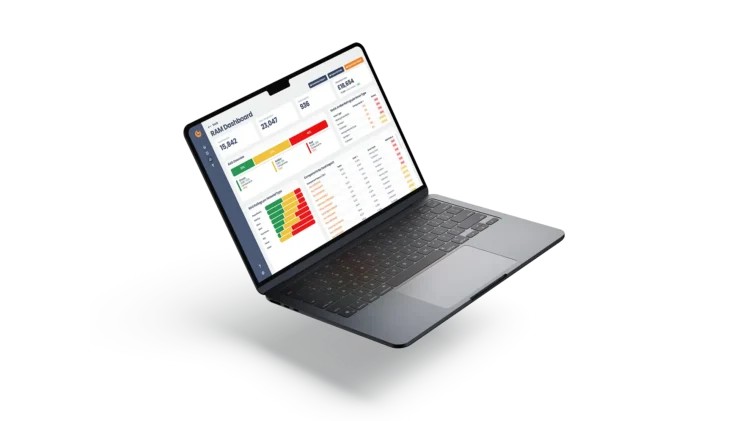
Clarity’s RAM Assess platform helps producers assess packaging recyclability at scale, identify incomplete data and understand which materials or components are contributing to RED ratings.
You can manage your packaging assessments in one place, model potential packaging changes and forecast how they could affect your EPR costs. RAM Assess also provides a documented assessment trail to support your regulatory reporting and is continually updated to reflect changes to the methodology.
With RED-rated packaging set to become progressively more expensive, understanding where your greatest risks and opportunities lie could deliver significant savings.